The Bowery Presents

The Mercury Lounge upcoming shows

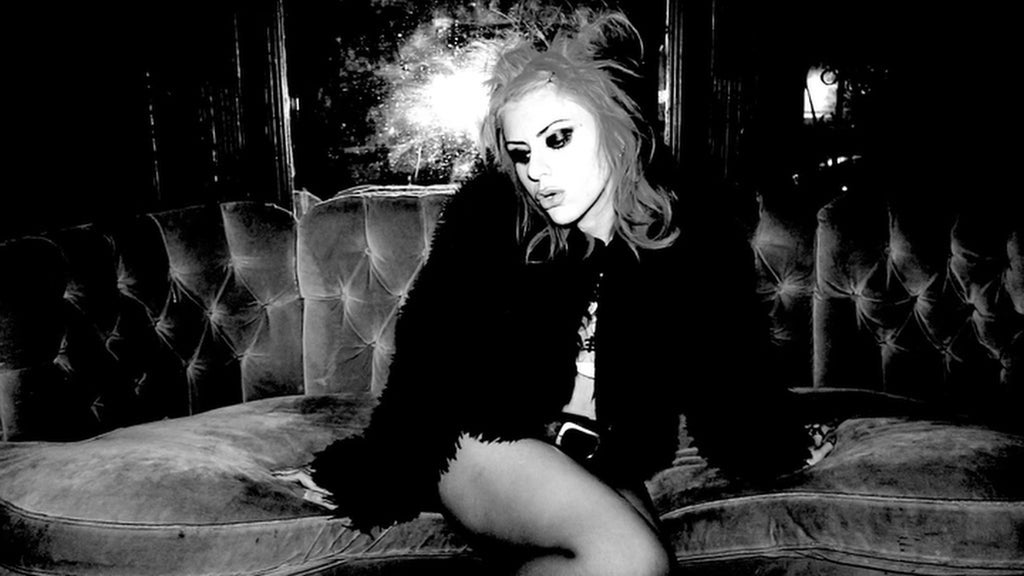
Dan Black
official website
myspace
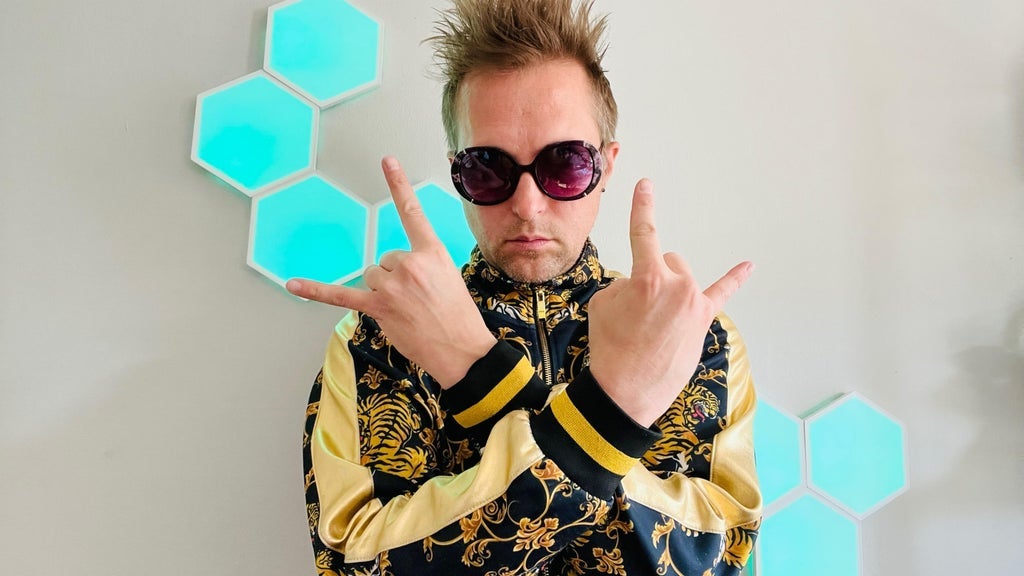
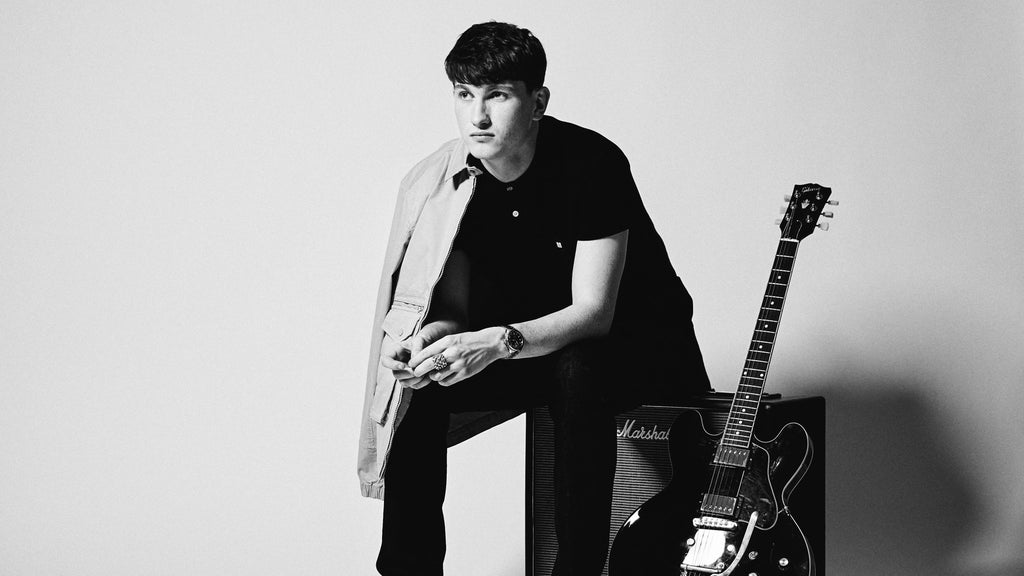
“The best music makes the colours start firing in your brain,” says Dan Black. “That’s what I always aimed for when I was writing these songs.” As the kaleidoscopic future-pop of Un proves, he repeatedly hit his target. Seldom has an album twisted so thrillingly through so many styles, nor over-flowed with so much melody and feeling. Little wonder that Black is being tipped by the world’s critics and bloggers as one of 2009’s Most Likely To. Nor that Radio 1 have quickly playlisted his first proper single, the driving celebration of desire and loneliness that is Alone.

Un is a pop record inspired as much by Black’s love for the “transcendent, emotional wonder” of acts like Nick Drake and Sigur Ros as it is fuelled by his passion for the hip hop production of J Dilla, Flying Lotus and the Timbaland. Its songs flit seamlessly from throbbing electro to heart-tearing strings, and from plaintive acoustic guitar strums to shuddering hip hop beats. Black is the man whose yearning voice you’ll hear singing Un’s literate tales of “intense states of being, be they extraordinarily happy or extraordinarily hard”. But he’s also the abundantly talented chap who wrote, played, programmed and produced every last note of it. He even handles all of his own artwork and videos (they’re very good too).

If his name already rings a bell, that’s perhaps because you heard everyone from Zane Lowe to Perez Hilton raving about HYPNTZ, the Notorious BIG cover which first brought Black to the world’s attention as an unsigned act, early in 2008. Then again, it could be because you remember him as frontman of The Servant, an English rock band who made it big in continental Europe in the early part of this century.

“We did pretty well,” says Black, “but my heart was never really in it. I actually started The Servant on my own, just me and a computer. I was making music inspired by all these disparate things I was into – Prince, De La Soul, Jane’s Addiction, the Beastie Boys, The Smiths – but then I had to recruit some friends to recreate it live. That was when the rock side of things took over. We had some fun, but it always felt like four people’s compromise, rather than four people with a vision going in the same direction.”

In August 2007, when The Servant had finished promoting their second album, Black decided to quit and go it alone, parting ways with his band, his label and his management. He headed back to the Paris apartment he shares with his wife. “I was feeling very scared, but I had a completely blank canvas. There was a little window of time before I couldn’t afford to live, so I just decided to be extraordinarily indulgent and throw myself into making music.”

The winter of 2007/08 mainly found Black hunched over his laptop writing, tinkering, writing, recording and then writing some more. “I knew that unless I had great songs, it was all a bit pointless,” he says. “I think I wrote 70 songs in that time.” By his own admission, many of them were rubbish. But it quickly became clear that quite a few weren’t. Tracks like the shimmering, lysergic lullaby Life Slash Dreams, the wistful, New Order-esque Wonder and the strident, big beat love song U+Me began to spill out of him; sonically contrasting, but all driven by Black’s obvious knack for a catchy melody and a sharp, meaningful lyric.

“A lot had changed since I’d started The Servant,” he explains. “I’d lived some life, seen some things, so I had more to say. I think as a bunch of animals we need to continually address what it’s like to feel lonely, or sad, or in love. I’ve been through those emotions now, so I was in a much better place to write about them. But, equally, I’d become much more experienced in how to actually turn the things I had in my head into music.”

That’s why, rather than risking his ideas once again being dilluted by bandmates or producers, he decided to make Un entirely by himself. “It was incredibly liberating that I didn’t have to answer to anyone in any of this,” he says. “Suddenly it was totally down to me to make all the creative decisions. I had to learn a lot and I spent plenty of time groping around in the dark. But it was great that nothing could be shot down by anyone.”

In that spirit, he began to experiment with home-made mash-ups. “I’d try something like taking the drums from [Nelly Furtado’s] Maneater and mixing them with a Daft Punk hook before singing [The Smiths’] These Things Take Time over the top, just to see if I could make it work together. The idea was that I’d do that before I tried to emulate those things for my own songs. But some of those experiments turned out to have a weird power of themselves.”

The best example of that was HYPNTZ, which combined the drums from Rihanna’s Umbrella with sweeping strings from the soundtrack of John Carpenter’s Starman film, over which Black sang the rhymes from Notorious B.I.G.’s rap classic Hypnotize. “I’ve always been massively into B.I.G.,” he says. “In fact, the first song on the first Servant album actually uses drums sampled from Hypnotise. So doing that track was very much motivated by love. He’s articulating a mindset that is pretty ugly, but those lyrics are the result of an extraordinarily strange and amazing mind. My version accidentally turned into a lament; the chorus is me asking how he managed to squander his talent. Obviously he didn’t mean to get killed, but it was such a stupid waste.”

In the spring of 2008, Black registered a MySpace account and uploaded his striking HYPNTZ track to the player. “Because of The Servant, there were a few people wondering what I was going to do next and that track just seemed like a fast way of explaining where I was heading. I really didn’t expect it to get much attention.” But it quickly did. Within weeks the track was being raved about in print across the world and getting daytime airplay on Radio One. By the summer, A&M had snapped him up to a major deal.

Black celebrated by heading back to Paris to finish off the album. “The meat and potatoes were already in place,” he says. “But I spent a long time making sure that the seasoning and the vegetables were right. That cliche about great art being 10% inspiration and 90% perspiration is completely true. I completely shut myself off from the world, going over the songs for months and months, until I was totally happy with them.”

The hard work clearly paid off. Un is a richly-detailed record that’s as strikingly innovative and contrasting as it is sonically impressive. But, more importantly, it also contains 11 belting examples of quality modern pop songs. From the gorgeous, electo-acoustic yearn of Sweet Thing to the caustic, break-up grooves of Yours, these are songs which all sound well capable of breathing life, heart and soul into daytime radio. Black certainly won’t be short of options when it comes to picking singles.

And what of the title? “Well, it’s an album of opposites, of happy and sad, lonesome and loved up, and I like the idea of the u and the n being the same as each other, only upside down,” explains Black. “It’s also the perfect prefix; I wanted this album to be un-rock, un-hip hop, un-everything. Plus it’s short, it’s pithy and it looks good. And, of course, it’s French for one, which worked for a debut album made in Paris. I’m quite pleased with it.”

He means the title, but he clearly feels the same way about his album. “Oh, absolutely,” he says. “Making this record has deprived me of sleep for more than a year. I’ve slaved and obsessed over every little part of it, like a painter going over and over his canvas. But it was totally worth it. This is as close as humanly possible to the record I’ve always wanted to make. That’s a pretty exciting feeling.”
Free Blood
official website
myspace
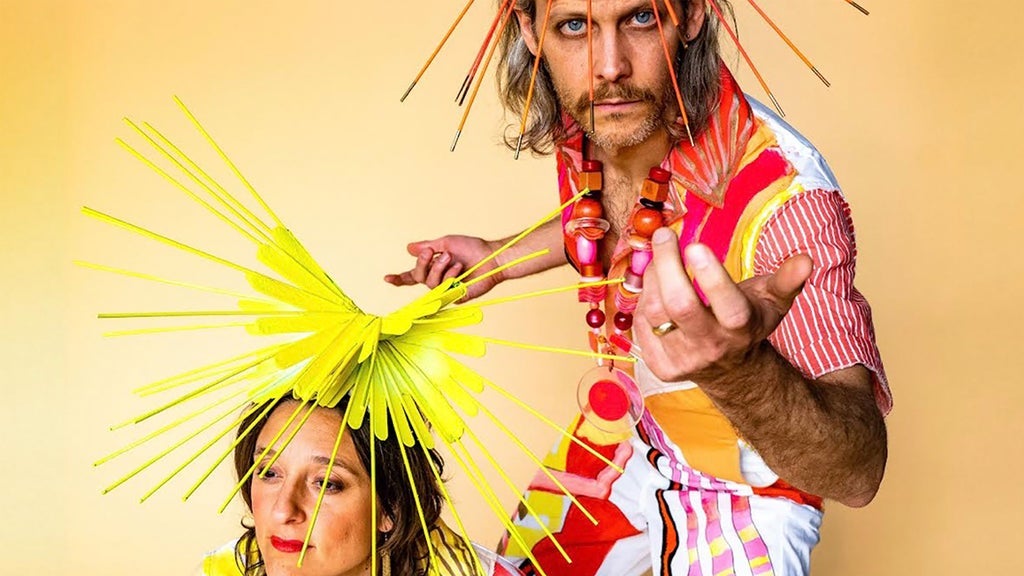
Free Blood in a concrete room with no windows in the sweltering summer of 2003. The group is based in Brooklyn, New York.

The concept was simple: A soundtrack for parties gone awry.

Music to fuel awkward sexual dalliances, desperate yelled misunderstandings on the dance floor, toilets over-flowing with the night’s collective regurgitation, lonesome midnight ramblings, hair-brained (possibly illegal) parlour games, stereo components fried by heat and moisture, backyard furniture bonfires, power outages, mass hallucination, etc.

The instrumentation was kept to a minimum intentionally (two microphones, bass guitar and mechanical drums) so that the group could fit into any cramped corner, with an easy getaway in case the authorities (or audience, even) took issue with the noise. Free Blood began playing smaller venues and house parties around the Brooklyn and Manhattan boroughs, usually lugging their own PA to the gig so that the ear-splitting volume they were accustomed to in the practice space could be replicated. These performances were designed to leave the audience deaf, dumb and blind…and perhaps with smiles on their faces.

Since their inception they have shared the stage (and floor) with a variety of groups (Melt Banana, Suicide, Jamie Lidell, TV On The Radio), only leaving the State of New York once for a brief four-day tour in Japan. The first three years saw Free Blood as strictly a live phenomenon whose appearances were erratic and ridden with chaos.
American Express — Are you a card member?

© 2010